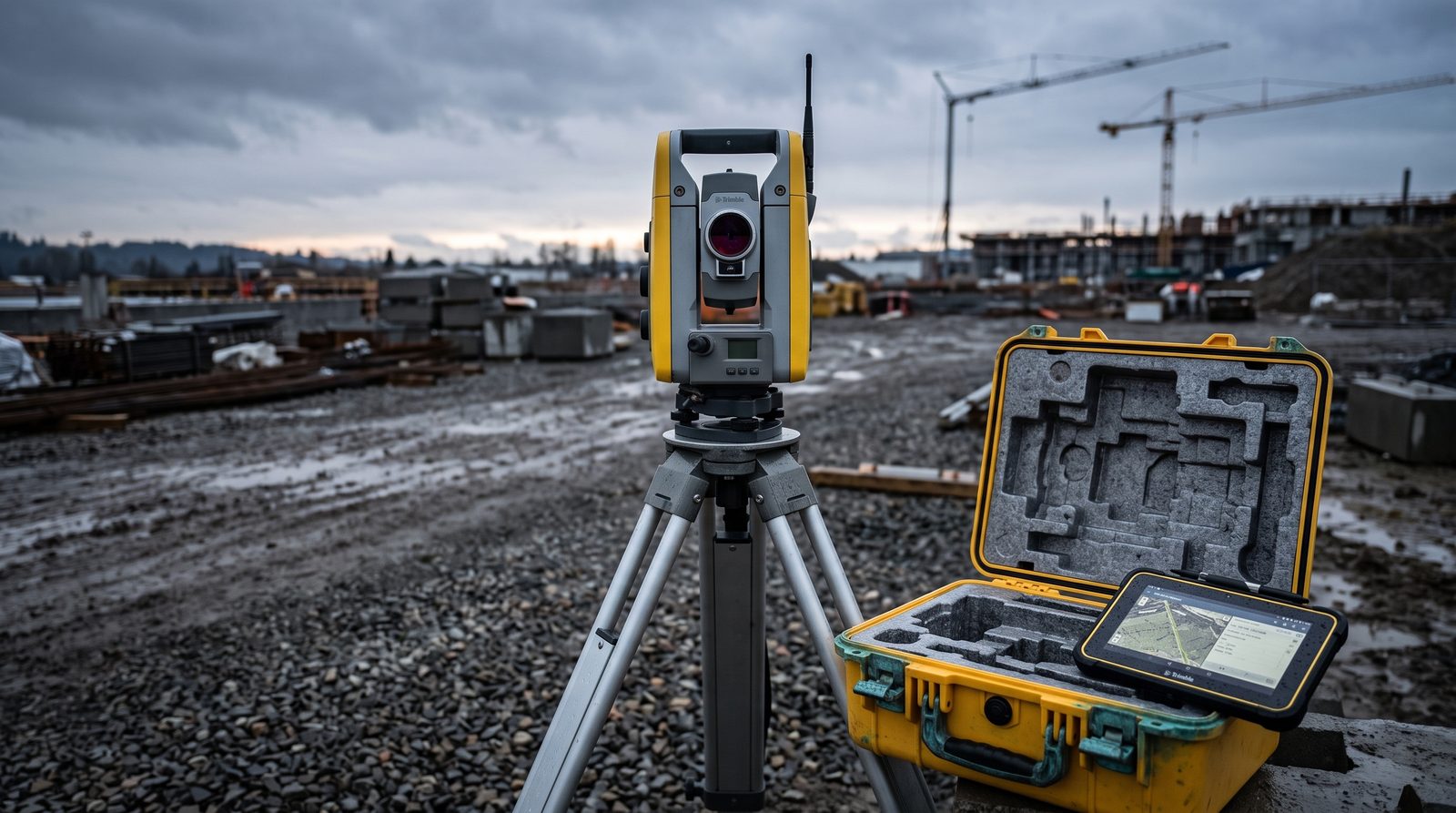
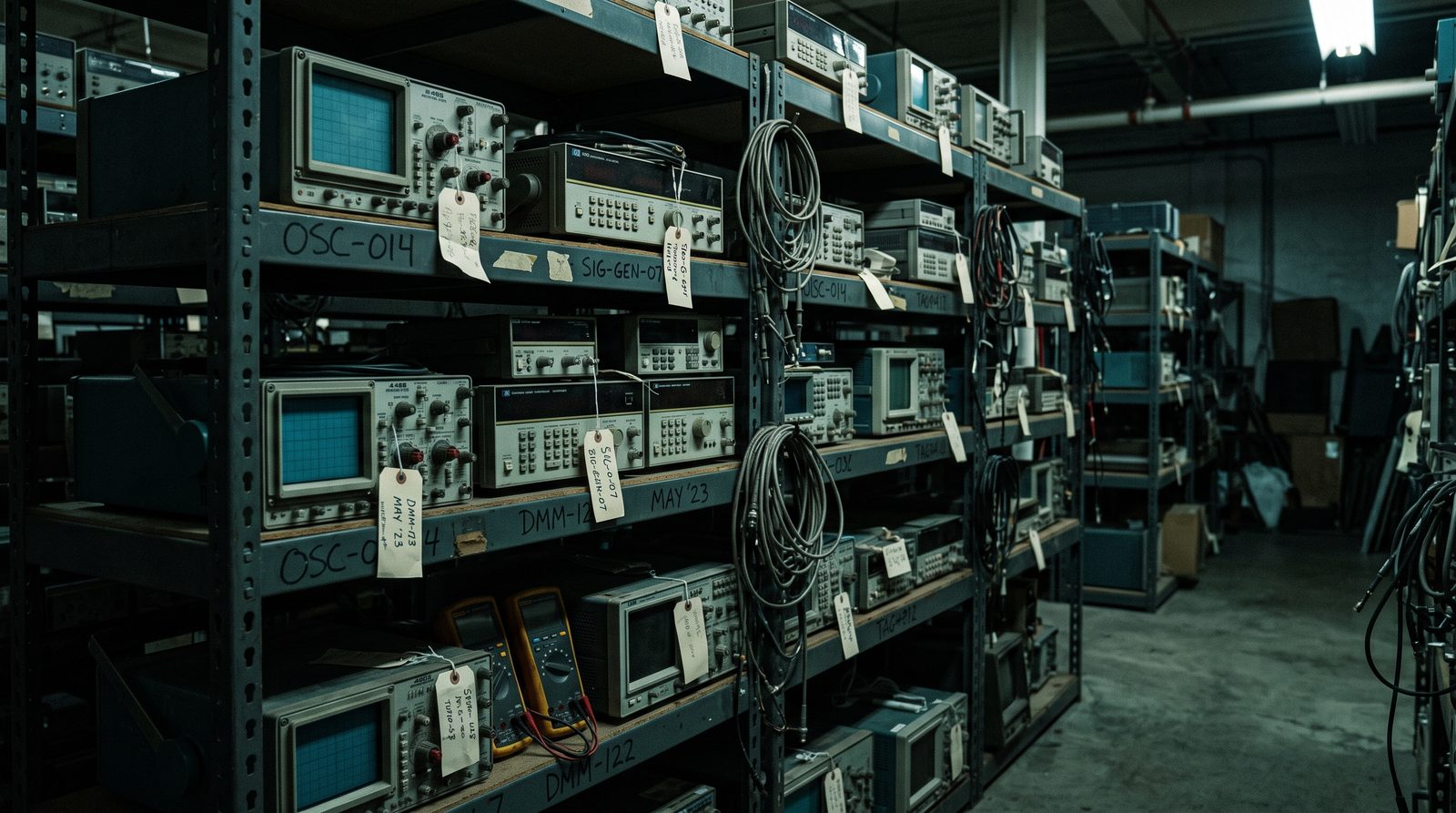
A used instrument has two prices that matter and one that doesn't. The one that doesn't is the asking price, which is whatever the seller hoped for on the day they typed the listing. The two that matter are what the same model actually sold for last month, and what it costs new today. The first tells you what the market will bear. The second tells you whether the used market is a bargain or a trap. Our price reports put those two numbers side by side, model by model, on the first of every month. This page explains how they are built so you can decide how much to trust them.
The first report lands on 1 October 2026.
What a price report contains
Each report covers one instrument family: total stations, bench oscilloscopes, handheld multimeters, GNSS receivers, and so on. Inside, every model gets one row.
| Column | What it means |
|---|---|
| Model | The exact model, with the variant if it changes the price (a Leica TS06 Plus 2" is not a TS06 Plus 5") |
| Sold, low to high | The range of sold prices for working used units in the past 30 days, after we remove the listings described below |
| Sold, typical | The middle of that range. With five or more sales it is the median. With fewer, it is the midpoint and it is flagged |
| Sales counted | How many sold listings made it into the row. Fewer than three and the row says "thin" and you should treat it as a hint, not a number |
| New price | What the same model, or its direct current replacement, costs new from the manufacturer or an authorised dealer on the day we sampled |
| Used discount | Typical sold price as a percentage below the new price. This is the number the whole site exists to give you |
| What moved | One line on why the band changed since the previous report, if it did |
Every table carries the date it was sampled. When you are reading a report from three months ago, the date is the first thing you should see.
Why sold prices, not asking prices
Our buyer's guides quote asking prices because that is what you see when you search, and it is useful to know the shape of what is on offer. But asking prices are a negotiation opener. On eBay, Best Offer listings routinely close 10 to 20 percent below ask, dealers relist the same unit for months at a number nobody pays, and one optimistic seller can drag the top of a range up by thousands.
Sold prices are the only figure that reflects a buyer and a seller agreeing. eBay keeps sold listings visible for about 90 days. We look at the last 30, which is long enough to get a real sample on common models and short enough that the number is still current when you read it.
There is one hole in the data, and we would rather tell you than pretend it isn't there. When a seller accepts a Best Offer, eBay shows the sale with the original price struck through and the accepted amount hidden. We count those sales, we know they closed below the struck-through figure, and we treat that figure as a ceiling for the row rather than a data point. Where more than half the sales in a row are hidden offers, the row says so.
Why the new price is next to it
A used price on its own is a number without a reference. A Rigol DS1054Z that sold for $300 used looks like a deal until you see the same scope at $349 new with a warranty, and then it looks like $49 saved for the privilege of buying someone else's dust. A Trimble S6 at $7,000 used looks expensive until you see the current equivalent at five times that.
So every row shows the new price, sampled the same day from the manufacturer's store or an authorised dealer, and the used discount that falls out of it. When a model is out of production, we show the price of its direct successor and say so, because that is the real alternative you are weighing.
Our read on the discount, from the data we have gathered so far: below 20 percent, buy new unless the used unit comes with something the new one doesn't. Between 30 and 60 percent is where most sensible used purchases live. Above 70 percent, ask why, because the market usually knows something about that model's age, support or failure rate. These are working rules, not laws, and the reports will say when a model breaks them.
What we leave out
A sold price is only useful if it is for the thing you are actually going to buy. We remove:
- Parts, untested and as-is listings. "Powers on, untested" is not a working instrument, and its sale price tells you what a gamble costs, not what an instrument costs.
- Lots and bundles, unless the bundle is the normal way the model sells. A total station with its data collector counts; a pallet of six does not.
- Overseas sellers on models with a working US market. Import fees and return risk make those a different product. When the only supply is overseas, the row says so and includes them.
- Accessories sold alone. A Trimble battery is not a Trimble.
- Obvious errors. A $50 sale of a $5,000 instrument is a mislabelled part or a mistake. It is removed and noted.
- Listings that were not actually a sale, such as relisted cancelled transactions where the same serial reappears within days.
What we do not remove is the ugly stuff that is real: a dented case, a worn keypad, a scope with one dead channel that was honestly described. Those set the bottom of the range, and the bottom of the range is where the deals are.
How the sample is taken
A person does this. Not a scraper, not a feed. For each model we open eBay's sold and completed listings, filter to used condition and the past 30 days, and read every result. Each qualifying sale is recorded with its date, price, condition notes, whether it was auction, Buy It Now or accepted offer, and what was included. The new price is checked the same day from the manufacturer or an authorised dealer, and the source is recorded.
That is slow, and it is the point. The models we cover are the ones where a wrong number costs you real money, and a human reading the listing is the only way to know that "Leica TS06" in a title is a TS06 Plus with a data collector or a bare 2009 body with a dead battery.
Reports are published on the first of each month, covering the previous month's sales. Buyer's guides are updated when a report moves a band by more than about 15 percent.
How to use a price report
Use the typical sold price as your offer ceiling, not your bid. Most Buy It Now listings on used instruments are Best Offer, and the typical sold figure is what sellers have already shown they will accept.
Use the low end of the range to decide what an imperfect unit is worth. A scope with cosmetic damage that was honestly described should sell near the bottom of the band, not the middle.
Use the used discount to decide whether to buy used at all. When the discount is thin, the new unit's warranty and return policy are worth more than the saving.
Use the sales count to decide how much to trust the row. Three sales is a hint. Fifteen is a market.
And use the sampling date. If it is more than six weeks old, check the current sold listings yourself before you make an offer. The report tells you how.
What the reports are not
They are not appraisals. Your specific instrument, with its specific history, may be worth more or less than the band.
They are not calibration data. A sold price says nothing about whether the instrument measures correctly. That is a separate question, and it is the one this site is named after. Read what "out of cal" actually means before you trust any used instrument's readings.
They are not sponsored. The reports contain no affiliate links, no dealer gets to see them before publication, and no number in them is influenced by who sells the model.
FAQ
Why only 30 days? Wouldn't 90 give a bigger sample? It would, and for rare models we say when we have widened the window. But used instrument prices move: a firmware end-of-life announcement, a new model launch or a big surplus liquidation can shift a band inside a month. A 90-day average would hide that. Thirty days keeps the number current, and the sales count tells you when it is thin.
Do you include auctions? Yes. Auctions are real sales with a real clearing price, and on some models they are most of the market. The report notes when a row is mostly auctions, because auction prices run lower than Buy It Now and skew the band down.
What about accepted Best Offers where the price is hidden? We count them, treat the struck-through price as a ceiling, and flag rows where hidden offers dominate. We do not guess the accepted amount.
Where does the new price come from? The manufacturer's own store where one exists, otherwise an authorised dealer's published price, sampled the same day as the sold data. The source is recorded for every row. We do not use marketplace new listings from unauthorised sellers.
Can I request a model? Yes. Use the contact page. Models with an active used market and at least a few sales a month are the ones we can report on reliably, and those are the ones we add first.
The first report is 1 October 2026. It will cover used total stations, because that is where the biggest dollar mistakes get made, with used bench oscilloscopes to follow. Both buyer's guides will be updated to match: the used total station price guide and the used oscilloscope buyer's guide.